Why Having the Most Reviews Won’t Save Your Map Ranking Anymore
It’s the most common frustration I hear from business owners and agency leads today: “Kevin, we have 500 five-star reviews. Our competitor down the street has 42. Why are they sitting at the top of the Local 3-Pack while we’re buried on the second page?” If you are still operating under the 2018 playbook where review volume was the ultimate trump card, you are losing money every single day. In 2026, the “Review Quantity” era is officially over.
As a Google Business Profile Product Expert, I’ve watched the algorithm pivot from a simple popularity contest to a complex evaluation of proximity, behavioral signals, and entity relevance. Google has realized that review counts are easily manipulated and often don’t reflect the current reality of a business’s service quality. Today, proximity and engagement are the dominant forces. If you want to achieve Local 3 Pack Mastery, you have to stop chasing a number and start understanding the signals that actually move the needle.
The “Quantity Myth”: Why 1,000 Reviews Can Still Mean Zero Calls
There was a time when hitting the 1,000-review milestone meant you owned the neighborhood. That moat has evaporated. The “Quantity Myth” suggests that more is always better, but Google’s 2026 updates have introduced a sharp curve of diminishing returns. Once you have enough reviews to establish “trust” (which varies by niche), adding another 500 does almost nothing for your rank if your other signals are stagnant.
The algorithm now prioritizes Review Velocity and Review Freshness over total volume. If you earned 800 reviews in 2023 but have only received five in the last three months, Google views your business as potentially “cooling off” or under new, less effective management. A competitor getting three high-quality reviews per week – even if their total is only 50 – will likely outrank you because they demonstrate current relevance. Furthermore, over-relying on automated systems can backfire; I’ve detailed this in my guide on Why your review automation is scaring off local customers and tanking your rank. If your reviews look templated or arrive in unnatural bursts, you’re triggering spam filters rather than ranking signals.
To truly move the needle, you need a google business profile seo strategy that focuses on the quality of the interaction. Google is now looking for “unstructured citations” within the reviews – specific mentions of services, locations, and staff names – that prove the reviewer actually visited your location. A generic “Great service!” review is worth a fraction of a review that says, “The HVAC repair in Downtown Seattle was fast and professional.”
Proximity vs. Popularity: The 2026 Proximity Filter
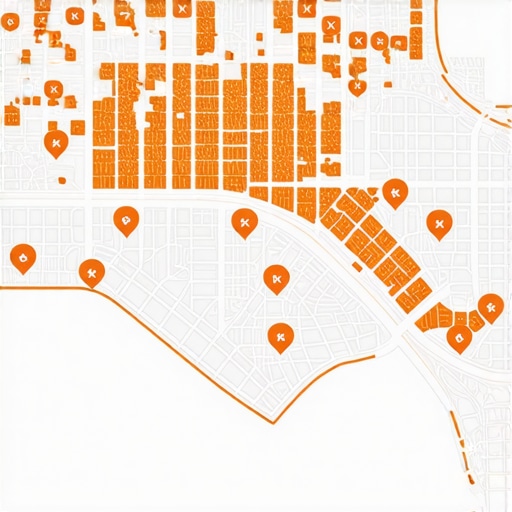
The most significant shift in the last two years is the tightening of the “Proximity Filter.” According to the Search Atlas 2025/2026 Study, proximity has surpassed all other factors as the #1 driver of visibility in the Map Pack. You can have the best reputation in the state, but if a user is searching from two blocks away from your competitor, Google will favor them to provide the most “convenient” result.
This creates what I call the “Invisible Wall.” You might dominate your immediate square mile, but the moment a user crosses a neighborhood boundary or a highway, your listing disappears. This is because proximity “gets you seen,” while relevance and reviews “get you chosen.” If you aren’t appearing in the search results to begin with, your 500 reviews are invisible. To combat this, you need to implement 5 Map Pack Optimization Adjustments for 2026 Proximity to signal to Google that your service area is wider than your physical doorstep.
Using local seo tools, we can now see that Google is prioritizing “hyper-local” results more than ever. This is a response to user behavior; mobile users want immediate, nearby solutions. If you are a plumber based in the suburbs trying to rank in the city center, your review count won’t save you from the proximity filter. You need to build local entity authority that proves your presence in those target zones through localized content and geo-tagged assets.
Behavioral Signals: The Real Reason You’re Losing to “Smaller” Rivals
If proximity is the gatekeeper, behavioral signals are the judges. Google isn’t just looking at what you say about yourself or what reviewers say; they are watching what users do when they see your listing. These “6 Behavioral Signals for Local 3 Pack Mastery” are now the secret sauce of top-tier rankings. These include:
- Click-Through Rate (CTR): Are people clicking your listing more often than the ones above you?
- Click to Call: How often are users initiating a call directly from the Map Pack?
- Request a Quote: High engagement with Google’s native lead tools signals high relevance.
- Dwell Time: Are users spending time reading your updates and looking at your photos?
- Driving Directions: This is a massive signal of real-world intent.
- Photo Interactions: In 2026, this has become a primary ranking factor.
Recent data suggests that photo interactions now matter more than review text in high-visual niches like contracting, real estate, and hospitality. If a user spends 30 seconds scrolling through your project gallery, Google receives a stronger signal of “relevance” than if they simply glanced at your star rating. I’ve written extensively on How to Improve Google Maps SEO by Focusing on Photo Interactions Instead of Reviews because the data shows that “active” listings – those that users engage with – will always beat “static” listings with high review counts. To monitor how these behaviors impact your position, using a google maps rank tracker is essential to see the correlation between engagement spikes and ranking jumps.
The “Hidden Listing” Problem: When Google Filters You Out
Sometimes, you aren’t ranking poorly; you are being filtered out entirely. This is the 2026 evolution of the “Possum” filter. Google’s goal is to provide variety in the Map Pack. If there are three dental offices in the same building or on the same block, Google will often “hide” two of them to avoid redundancy, regardless of who has the most reviews.
This “Hidden Listing” problem is a nightmare for businesses in dense urban areas or shared office spaces. If your competitor has a slightly more “authoritative” entity – perhaps their website has more local backlinks or their primary category is a better match for the search intent – Google will filter you out. You could have double their reviews and still be relegated to the “View More” secondary list. We’ve seen cases where businesses were filtered because they shared a phone number or a similar category with a neighboring business. Understanding How We Fixed the ‘Hidden Listing’ Problem Without Changing Our Business Address is critical for anyone operating in a competitive “cluster.”
Beyond the Profile: Why Your Website is Tanking Your Map Rank
Local SEO is no longer just about your Google Business Profile; it’s about your digital infrastructure. Your website serves as the “source of truth” for Google’s local entity engine. If your website is generic, your Map Pack ranking will be capped. Google looks for “Entity Strength” – a combination of your site’s authority and its local relevance.
Many businesses fail because they use one generic “Services” page. In 2026, you need neighborhood-specific content. If you want to rank in “North Hills,” you need a page that mentions North Hills landmarks, local events, and specific projects completed in that area. This is why Why Neighborhood-Specific Content Outperforms Generic Local Keywords Every Time. This content feeds the Map Pack’s relevance algorithm, telling Google, “Yes, this business is physically here, but they are also contextually relevant to this specific neighborhood.”
Furthermore, your technical google maps ranking service strategy must include local schema markup that connects your website entities to your Map listing. If Google can’t verify the connection between your site’s data and your profile’s data, it will default to the competitor with the clearer “Entity Map.”
The 2026 Local SEO Checklist: How to Reclaim the Top Spot
If you’re stuck at #5 despite having a mountain of reviews, it’s time to pivot. Follow this checklist to modernize your strategy:
- Audit for “Hidden Listing” filters: Search for your keywords and zoom in on the map. If your pin only appears when you zoom in, you are being filtered.
- Increase Review Velocity: Don’t aim for 100 reviews today; aim for 2 reviews every week, consistently.
- Optimize for “Neighborhood Signals”: Add geo-specific keywords to your photo EXIF data and your website’s local landing pages.
- Boost Behavioral Signals: Use high-quality, professional photos and “Google Updates” to encourage clicks and dwell time.
- Strengthen Your Entity: Ensure your NAP (Name, Address, Phone) is consistent across the web, but focus more on building local backlinks from neighborhood blogs and news sites.
- Use Professional Tools: Leverage local seo software to track your geo-grid rankings across different city blocks, not just from your office chair.
Conclusion: In 2026, the Map Pack is a game of relevance and responsiveness. Reviews are merely the baseline entry fee; they are not the winning strategy. If your proximity signals are weak and your users aren’t engaging with your listing, a thousand five-star reviews won’t save you from obscurity. Stop chasing the review count and start auditing your behavioral signals. If you’re ready to dominate your local market, visit the website of SEO Viper to explore the local seo ranking tools used by the pros to bypass the “Review Moat” and claim the #1 spot.