
It happened again yesterday. I watched a potential customer walk right past my storefront, glance at my signs, and then, almost instantly, veer off to a competitor just a few doors down. That sinking feeling hit me hard—despite investing countless hours into my local SEO and Google My Business, I was invisible at the very moment a nearby customer needed me most. Have you experienced the same frustrating moment where your shop feels like it vanishes just as someone steps across the street? If so, you’re not alone, and I want to share what I learned from my own struggles.
Understanding the Local Maps Mystery
The reality is, in the realm of local SEO, proximity isn’t the only thing that matters. I used to think that being physically close to my customers was enough to dominate the local 3-pack. Turns out, there’s a hidden game of signals, rankings, and user behaviors that dictate visibility. Early on, I made the mistake of focusing solely on traditional tactics—like keyword stuffing and posting every review I could get—without grasping the underlying mechanics of map pack ranking. This oversight cost me ranking drops and missed leads, and it wasn’t until I dug deeper that I truly started to change my approach. According to recent research, over 60% of local searches result in a visit or call within 24 hours, yet many businesses remain overlooked because they aren’t optimizing the right signals—signals I’ll unveil today to help you stay visible when it counts most.
Learn the secrets to map pack visibility.
Are you tired of watching potential customers walk right past your door without noticing you? If this problem hits close to home, don’t worry—there’s a solution. Let’s explore how to make your shop impossible to ignore, even when customers are just crossing the street.
Claim and Optimize Your GMB Profile
Think of your Google My Business (GMB) listing as your digital storefront’s front door—make it inviting and complete. I once spent an entire afternoon filling out every detail of my profile, from accurate business categories to selecting the right services. This consistency acts like a beacon signaling relevance to Google. Ensure your primary category aligns precisely with your core offering, and sprinkle in secondary categories that reflect specialty services. Use high-quality photos, especially your logo and interior shots, to enhance credibility. Regularly update your profile with current hours, special offers, and relevant posts to show Google and shoppers you’re active. Boost your Maps performance by fine-tuning your profile and staying active.
Strategically Gather Reviews and Increase Engagement
Reviews act like social proof that sway local ranking algorithms. I remember reaching out to loyal customers with personalized messages, politely asking for reviews right after service. Timing matters—prompt reviews are more genuine and impactful. Avoid review suppression by discouraging fake or incentivized reviews, which can harm your rankings. Focus on accumulating a steady flow of authentic reviews, aiming for consistency rather than volume. Respond promptly to all reviews, especially negative ones, demonstrating engagement and professionalism. Use keywords naturally in your responses to reinforce relevance. Additionally, encourage customers to upload photos and answer questions about your business—these interactions tell Google you’re active and trustworthy. For detailed tactics, explore GMB ranking tactics designed to outshine competitors.
Leverage Local Content and Citations
Creating locally relevant content can give your business a significant edge. Share blog posts about community events, local news, or seasonal topics, embedding local keywords naturally. I once blogged about a prominent local festival, including keywords like “best pizza near [city],” which attracted nearby traffic. Combine this with consistent NAP (Name, Address, Phone Number) citations across reputable directories to build authority and signal relevance. Ensure your citations match your GMB details exactly; discrepancies can hurt rankings. Tools like Moz Local or BrightLocal can help audit and rectify citation inconsistencies. Additionally, nurturing local backlinks from community websites or partnerships amplifies your authority. This multi-layered approach creates a network of relevance signals that Google recognizes—boosting your chances to appear in the coveted local 3-pack.
Optimize Map Pack Signals with Technical Precision
Behind the scenes, Google evaluates dozens of signals—many of which can be manipulated or optimized. Start by ensuring your business is correctly categorized with the most relevant primary and secondary categories. Use GMB pack ranking hacks to understand signal hierarchy. Embed and optimize your website with local schema markup—think of it as speaking Google’s language directly. Maintain a fast-loading website with mobile responsiveness because user experience impacts rankings. Regularly check your GMB insights for keyword trends and adjust your profile and content accordingly. Small technical tweaks, like correcting duplicate listings or fixing inconsistent NAP information, can have outsized impacts on your visibility.
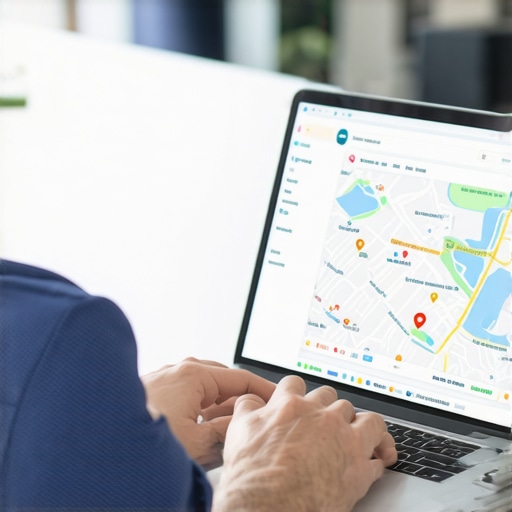 Many marketers believe that optimizing existing signals like reviews or categories is enough to rank high in the local 3-pack. However, this common approach overlooks the complex nuances that truly influence visibility. For instance, a frequent misunderstanding is assuming that increasing review volume alone guarantees better rankings. While reviews are important, recent studies show that *review velocity* and *review quality* play more pivotal roles in sustained visibility — focusing solely on quantity often leads to short-lived gains. Moreover, many assume that simply having the correct business category is sufficient. In reality, subtle category misalignments or irrelevant secondary categories can cause your listing to be filtered out, especially in hyper-competitive niches. This is where advanced tactics like implementing schema markup and optimizing for rich snippets become game-changers, enabling your profile to stand out in a crowded local landscape. Learn proven tweaks that refine your mapping signals effectively. Additionally, many overlook the importance of leveraging behavioral signals—like bounce rate and direct engagement metrics—which Google increasingly uses to assess local relevance. Achieving mastery isn’t just about ticking boxes; it’s about understanding and manipulating these intricate signals to your advantage.
What advanced signals are most often ignored but can boost your rank?
Many experts identify localized schema application, voice search optimization, and Google Maps-specific engagement metrics as underutilized yet powerful tools. Correctly harnessed, these can help you sidestep common pitfalls like duplicate listings or inconsistent NAP data, which hamstring your efforts. Remember, the goal is to optimize the entire ecosystem—not just isolated elements. For a comprehensive blueprint, explore our cornerstone guide on mastering the local 3-pack—it’s packed with insights for persistent success.
Finally, beware of the trap that many fall into: focusing solely on *on-page* signals while neglecting *off-page* elements like local backlinks and community engagement. This incomplete picture hampers real authority building, which is critical for top rankings. Don’t let this mistake sabotage your efforts—delve into how advanced link-building strategies can complement your profile optimizations for durable visibility. Discover how to maintain momentum even when algorithm updates threaten your position. Remember, the key to local dominance involves a holistic, nuanced approach—not shortcut tactics or superficial fixes. Have you ever fallen into this trap? Let me know in the comments.Maintaining top rankings in Google Maps’ local 3-pack requires consistent effort and the right tools. I personally rely on BrightLocal for citation tracking because it provides precise audits and real-time updates, helping me ensure my NAP data remains consistent across all directories—an often overlooked factor that Google heavily weighs. Additionally, logging into Google My Business insights regularly reveals the performance trends and user engagement patterns, allowing me to fine-tune my content and review strategies accordingly rather than reacting solely to ranking drops. For keyword tracking and competitor analysis, SEMrush’s local SEO tools prove invaluable, giving me visibility into evolving search terms that can impact visibility over time. Looking ahead, I predict that automation and AI-driven monitoring will become critical—tools like BrightLocal are already integrating AI elements to flag inconsistencies or potential issues before they affect rankings. To stay ahead, I recommend setting up automated alerts for citation discrepancies and review activity surges to catch and address issues proactively. How do I maintain long-term authority and avoid ranking fluctuations? The key is to establish a routine that combines diligent monitoring with strategic updates—think of it as a health check for your local SEO ecosystem. Regular audits using tools like BrightLocal, combined with ongoing content and review engagement, form the backbone of sustained success. Remember, consistency beats quick fixes. Explore our detailed strategies for map pack stability by visiting our cornerstone guide on mastering the local 3-pack. For example, automating your citation audits can save time and prevent data inconsistency issues, keeping your profile resilient against algorithm shifts. If you’re ready to implement this, start by integrating BrightLocal’s citation tracking into your routine today, and watch your rankings stabilize even amidst the evolving landscape of local search.
What I Wish I Knew When Starting Out in Map Pack Optimization
One of the most eye-opening lessons I learned is that local SEO isn’t just about ticking boxes; it’s about decoding the nuanced signals Google uses to rank your business. I once believed that a higher review count alone would propel me to the top, only to realize that review velocity and relevance matter far more. This revelation shifted my entire strategy, teaching me to focus on quality engagement and timely reviews rather than sheer volume.
Another insight was understanding the importance of precision in categorization. I used to assume choosing broad categories sufficed, but I found that aligning primary and secondary categories closely with your services can make the difference in rankings. Small details like these can prevent your listing from getting filtered out in competitive environments.
Finally, I underestimated how technical aspects like schema markup and website speed influence local visibility. Embedding local schema allowed Google to understand my business’s niche better, while optimizing website responsiveness kept visitors engaged—both critical factors in maintaining top spots in the local 3-pack.
Tools and Resources That Transformed My Approach
My go-to toolkit includes BrightLocal, which I’ve relied on for accurate citation tracking and audit reports. Its real-time updates help me catch inconsistencies before they impact rankings. Additionally, SEMrush provides valuable insights into local keyword trends and competitor analysis, enabling me to refine my content strategy. I also trust Google’s own insights dashboard for performance metrics; understanding how users interact with my profile guides my ongoing optimization efforts. Lastly, I recommend exploring our cornerstone guide on mastering the local 3-pack for in-depth strategies that keep your business visible amidst algorithm changes.
The Fire That Keeps My Local SEO Passion Burning Bright
Embarking on this journey of local map pack mastery is both challenging and rewarding. Every insight, every tweak, and every new tool brings you closer to standing out when it matters most — right in your community. Don’t wait for competitors to take the lead; take action now and turn your visibility challenges into opportunities. Remember, mastering the nuances of Google Maps SEO isn’t just about ranking — it’s about creating a resilient, trustworthy presence that attracts local customers consistently. Keep pushing, stay curious, and your efforts will pay off in loyal, engaged clients.