5 Specific Photo Types That Generate More Leads Than Your Business Description
In the local search landscape of 2026, the traditional hierarchy of Google Business Profile (GBP) elements has been completely upended. For years, SEOs obsessed over the “Business Description” – agonizing over every character and keyword. Today, I’m here to tell you that while your description matters for indexing, it is virtually invisible to your potential customers during their first five seconds of interaction. As we navigate the current era of local search, consumers scan photos before they read a single word of your carefully crafted bio. In my years as a Local SEO consultant, I have seen one truth remain constant: photos are your “proof of life.”
Visual engagement is now the primary driver for “Request a Quote,” “Call,” and “Direction” actions. If your profile lacks high-quality, strategic imagery, you aren’t just losing ranking positions; you are losing the trust of every lead that finds you. In 2026, a business without a robust, updated photo gallery is a business that doesn’t exist in the eyes of the consumer. We are moving beyond “pretty pictures” and into the realm of visual conversion optimization. This guide will break down the five specific photo types that outperform your text description every single time.
Why Your Business Description is Secondary to Visual Proof
The psychology of a local search is frantic. Whether someone is looking for an emergency plumber or a high-end litigation attorney, they are looking for a reason to say “no” so they can narrow down their choices. Your business description is a claim; your photos are the evidence. According to 2026 data trends and recent updates to consumer behavior studies (including insights from Rating Captain), while 77% of consumers regularly read reviews, they use photos as the “first proof” of reality. If the reviews say you’re great but the photos show a dilapidated van or an empty office, the “trust deficit” becomes too wide to bridge.
Google’s algorithm has also evolved. In 2026, completeness and freshness are no longer “best practices” – they are major ranking signals. Google’s Vision AI now analyzes the objects, text, and even the “vibe” within your images to determine if you are a relevant match for a specific search query. If you’ve ever wondered why high maps impressions aren’t turning into phone calls for your small business, the answer often lies in the disconnect between what you say you do and what your photos show you doing. A profile with 100+ high-quality images will almost always out-convert a “perfectly” written profile with only three stock photos.
Photo Type #1: The “Proof of Life” Exterior Shot
The “Proof of Life” exterior shot is the cornerstone of local trust. For a brick-and-mortar business, this is your storefront. For a Service-Area Business (SAB), this is your branded vehicle parked in front of a recognizable local landmark or a customer’s home. This photo signals to both Google and the user that the business is physically real and currently operational. In an era of “ghost kitchens” and lead-gen spam listings, showing a physical presence is a massive competitive advantage.
When taking these shots, you must consider the technical standards of 2026. For mobile users – who make up the vast majority of local searches – a 16:9 aspect ratio is preferred to fill the screen effectively. However, for desktop “Map Pack” views, Google often crops these into a 720×720 square. I recommend uploading both versions. Ensure the lighting is natural and your signage is clearly visible. If you are using local seo tools to track your performance, you will notice that profiles with verified exterior shots often see a lower “bounce” rate from the profile itself.
Optimizing the Exterior for Local Relevance
Don’t just take one photo. Take photos from different angles and at different times of day. This shows Google that your business is a consistent part of the neighborhood fabric. If your business is located in a complex, include a photo of the directory or the entrance to the building. This reduces “customer friction” – the anxiety a person feels when they aren’t sure if they can find your front door. Every bit of friction you remove increases the likelihood of a conversion.
Photo Type #2: The “Action” Shot (Service in Progress)
For contractors, plumbers, HVAC technicians, and even professional services like dentists, the “Action Shot” is your most potent conversion tool. This is a photo of the work actually being performed. It humanizes the brand and moves the customer from the “research” phase to the “visualization” phase. They aren’t just hiring a “plumber”; they are hiring this person who is clearly skilled and currently working on a project similar to theirs.
Action shots also provide a secondary SEO benefit. When Google’s AI scans a photo of a technician installing a specific brand of furnace, it associates your profile with that brand and that specific service. This is a subtle but powerful way to how to improve Google Maps SEO by focusing on photo interactions instead of reviews. When users dwell on these photos or zoom in to see the detail of the work, those engagement signals tell Google that your content is highly relevant to the searcher’s intent.
Capturing the “Work Flow”
- Focus on Detail: Close-ups of a clean weld, a perfectly laid tile, or a tidy electrical panel speak volumes about your quality.
- Include the Team: Ensure your staff is wearing branded gear. This reinforces brand recognition and professionality.
- Safety First: Make sure all safety equipment (gloves, goggles, cones) is visible. It signals that you are a legitimate, insured professional.
Photo Type #3: The “Team & Culture” Human Element
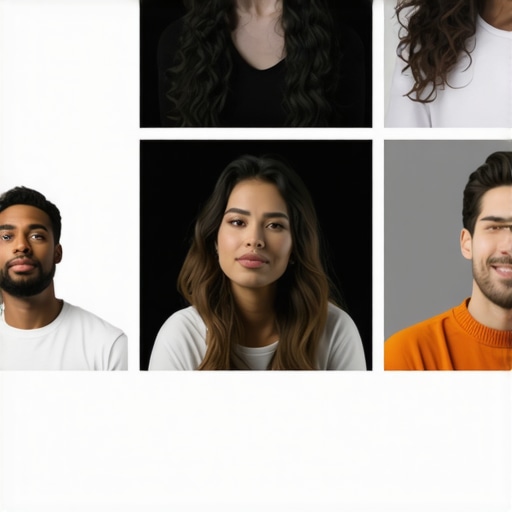
High-trust industries – lawyers, dentists, med spas, and accountants – thrive on the “Team & Culture” photo. In these niches, the customer isn’t just buying a result; they are buying a relationship. Showing the faces of the people who will be answering the phone or performing the consultation lowers the barrier to entry for a new customer. It transforms a cold, digital listing into a warm, inviting invitation.
Data from 2025 and 2026 shows that profiles featuring “team” photos see a significantly higher Click-Through Rate (CTR) than those that rely solely on logos or building shots. People want to do business with people. A group shot of the office staff or a “candid” photo of a strategy meeting suggests a collaborative and professional environment. This is where you can truly differentiate yourself from the corporate giants who use sterile, soul-less stock photography.
The Death of Stock Photography
If there is one piece of advice I can give you as a consultant, it is this: Delete your stock photos. Consumers in 2026 have developed an “uncanny valley” reflex for stock imagery. They can spot a fake “smiling receptionist” from a mile away. Even a slightly lower-quality photo of your actual team is 100x more effective than a high-res stock photo of people who don’t work for you. Authenticity is the ultimate currency in local SEO.
Photo Type #4: The “Result” (Before & After)
The “Result” photo is the ultimate lead generator. Whether it’s a transformed kitchen, a cleared-up skin condition, or a successfully settled court case (represented visually through a handshake or a signed document), showing the “After” is what closes the deal. For many service-based businesses, a “Before & After” collage is the most shared and engaged-with type of content on a Google Business Profile.
To maximize the impact of these photos, ensure they are formatted correctly. Avoid looking like “spam” by keeping the text overlays to a minimum. Let the work speak for itself. If you are looking to google business profile optimization, you should categorize these photos specifically under the “Work” or “Menu” sections if applicable. The transformation provides immediate cognitive proof that your business can solve the customer’s specific problem.
Best Practices for Results Photos
Consistency is key. Try to take the “Before” and “After” shots from the exact same angle and in similar lighting. This makes the transformation much more dramatic and believable. For landscapers, this might mean a wide shot of the yard; for a detailer, it might be a close-up of a car hood reflecting the sky. These photos are the “Case Studies” of the mobile world – quick, digestible, and incredibly persuasive.
Photo Type #5: User-Generated Content (The Customer’s Perspective)
While professional photos are important, a grainy, slightly off-center photo uploaded by a customer is often more valuable than a $5,000 photoshoot. This is User-Generated Content (UGC), and it is the gold standard of social proof. When a customer takes the time to upload a photo of their meal, their new roof, or their repaired car, they are giving you a public endorsement that you cannot buy.
Google prioritizes UGC because it is harder to fake. In 2026, the algorithm heavily weighs these images when determining local rankings. You might ask, does map pack optimization need UGC? 4 data-backed 2026 facts suggest that listings with consistent customer-uploaded photos rank 25% higher in competitive markets. Encourage your customers to “add a photo” when they leave a review. You can even incentivize this by telling them it helps other locals find quality service.
Managing Your UGC
You cannot control what customers upload, but you can influence it. Create “Instagrammable” moments in your business. If you’re a contractor, leave the job site so clean that the customer wants to take a photo of it. If you’re a restaurant, focus on presentation. When a customer uploads a photo, interact with it. Thank them in the review response and mention specific details about the photo. This engagement signals to Google that the listing is active and the community is engaged.
Technical Optimization: Sizes, Formats, and 2026 Standards
To ensure your photos actually help you rank higher on google maps, you must adhere to the technical standards. Google’s current requirements are specific, and failing to meet them can result in your photos being buried or rejected.
- Format: JPG or PNG are the standards. Avoid WebP for GBP uploads as it can sometimes cause processing glitches.
- Size: Between 10KB and 5MB. If a photo is too large, it will slow down the profile loading time; too small, and it will look pixelated on high-res mobile screens.
- Resolution: 720 x 720 pixels is the minimum recommended. I suggest 1200 x 1200 for clarity.
- Freshness: This is the “secret sauce.” Uploading at least one new photo per week is a massive ranking signal. It tells Google the business is active and the information is current.
- Geo-Tagging: While Google strips EXIF data, the AI still recognizes landmarks and locations within the image. Taking photos on-site is always better than uploading from a remote office.
Using google maps ranking service or similar specialized software can help you schedule these uploads so that your profile never looks “stale.”
Conclusion: Auditing Your Visual Assets
Your Google Business Profile is often the very first impression a customer has of your brand. In 2026, you cannot afford to let that impression be a wall of text or a single, lonely logo. Photos are the bridge between “appearing in search” and “getting a phone call.” They provide the visual confirmation that your business is real, active, and capable of delivering the results the customer desires.
I challenge you to perform a 10-minute photo audit today. Look at your profile from a mobile device. Are your photos current? Do they show your team? Do they show your work in progress? If not, you are leaving leads on the table for your competitors to grab. If you find that your ranking is still stagnant despite having great photos, you may need to look deeper. Check out the 10-minute audit that finds exactly why your listing is stuck in the fifth spot to diagnose other underlying issues. Start uploading, start showing proof of life, and watch your lead volume transform.