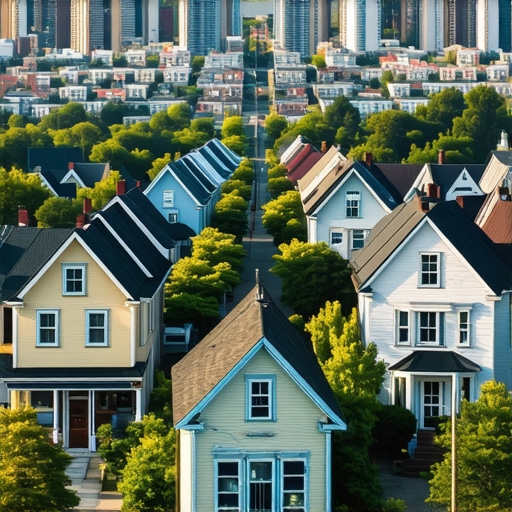
Why Neighborhood Backlinks Beat Major Media Mentions for Map Rankings
In the high-stakes world of google business profile seo, there is a persistent myth that has led many business owners and even seasoned marketers astray. This myth suggests that a backlink from a high-authority national publication – think Forbes, The New York Times, or TechCrunch – is the ultimate “holy grail” for ranking anywhere on the web. While these “unicorn links” are undoubtedly valuable for general organic search and brand prestige, they often fail spectacularly when applied to the specific goal of dominating the Local 3-Pack.
As we navigate the SEO landscape of 2026, the algorithm has become increasingly sophisticated at distinguishing between global authority and local relevance. I’m Shahid Anwar, and in my years of experience as a google maps ranking service specialist, I have seen small, neighborhood-focused businesses consistently outrank massive national chains. The secret isn’t a bigger budget or a PR firm in Manhattan; it is the strategic acquisition of hyper-local neighborhood backlinks. In this guide, we will dismantle the “Authority Illusion” and show you exactly why your local backyard is more powerful than a national headline.
Section 1: The Authority Illusion
The “Authority Illusion” is the belief that a high Domain Authority (DA) score is the only metric that matters for a rank google business profile campaign. In traditional SEO, this often holds true. However, the Google Maps algorithm is a separate entity with its own set of rules. Google’s official documentation on local rankings explicitly identifies three core pillars: Relevance, Distance, and Prominence.
When you secure a mention in a national media outlet, you are checking the “Prominence” box on a global scale. But prominence in the local algorithm is relative. Google isn’t asking, “Is this business famous in the United States?” Instead, it’s asking, “Is this business a prominent and trusted entity within this specific five-mile radius?” A link from a national site lacks the “Geographic Relevance” necessary to satisfy the “Distance” and “Relevance” pillars for a specific zip code.
Furthermore, major media mentions are often “topically broad.” A mention of your plumbing business in a national lifestyle magazine doesn’t tell Google that you are the best plumber in downtown Austin. It just tells Google you are a plumber that someone in a national office decided to write about. To truly rank google business profile effectively, you need signals that anchor your business to the earth at a specific set of coordinates. This is where the neighborhood strategy begins to outshine the media-heavy approach.
Section 2: How the Google Maps Algorithm Actually Works in 2026
By 2026, the local search landscape has evolved into an “Entity-First” ecosystem. Google no longer just looks at keywords on your page; it builds a knowledge graph of your business entity. To rank higher on google maps, your entity must be inextricably linked to a specific location. The three pillars – Relevance, Distance, and Prominence – now function with hyper-precision.
Relevance: Beyond Keywords
Relevance is no longer just about having “pizza” in your title. It’s about Google seeing your entity mentioned alongside other local entities. If your pizza shop is mentioned on the website of the local high school’s football team and the neighborhood’s annual block party page, Google’s AI understands your relevance to that specific community better than any national link could ever convey. This is a core component of my Master the Local 3 Pack: A Step-by-Step Blueprint.
Distance: The Proximity Factor
Proximity remains the most dominant factor in the 2026 local algorithm. In many cases, a smaller shop with a weaker overall backlink profile will outrank a high-authority competitor simply because it is closer to the searcher and has more “hyper-local” signals. Google prioritizes the user experience, and for a local search, the best experience is often the closest, most “local” option.
Prominence: Local vs. Global
Local prominence is built through what I call “community citations.” These are mentions of your business on sites that are themselves geographically tied to your area. When Google sees that you are a pillar of the local community, your prominence score for searches in that area skyrockets. This allows you to outrank high-authority chains using hyper-local neighborhood mentions because the chain’s authority is spread too thin across thousands of locations, whereas yours is concentrated in one spot.
Section 3: Why Major Media Mentions Fail the “Locality Test”
The technical disconnect between a national link and a local ranking comes down to the “Locality Test.” When Google’s crawlers follow a link from a site like Forbes to your website, they see a massive boost in general authority. However, they don’t see a “Geo-Signal.” A Geo-Signal is a piece of data that ties the link to a specific location – such as a local address, a neighborhood name, or a local phone number on the referring page.
National sites are designed to be “location-agnostic.” They want readers from all over the world. Consequently, a link from them doesn’t confirm to Google that you serve the residents of a specific neighborhood. In fact, many businesses find that after a major media hit, their organic rankings for national terms go up, but their local map pack rankings remain stagnant or even drop as competitors with better local signals move in. This is why your local seo strategy fails when you ignore neighborhood boundaries.
To identify where your current strategy is lacking, using professional local seo tools is essential. These tools can help you visualize the “geographic gap” in your backlink profile. If all your links are coming from high-DA blogs with no local ties, you are essentially a “floating entity” in Google’s eyes – you exist on the internet, but you don’t exist in the neighborhood.
Section 4: The Power of Neighborhood Signals
What exactly qualifies as a “Neighborhood Backlink”? These are links from websites that are geographically constrained. They are the “digital handshakes” of your community. Examples include:
- Local Chambers of Commerce and BNI chapters.
- Neighborhood-specific blogs (e.g., “The Heights Community News”).
- Local youth sports sponsorships (Little League, soccer clubs).
- Niche-relevant local directories (Local hardware stores linking to local contractors).
- Community event pages and local charity sites.
This is the cornerstone of my hyper-local seo philosophy. These links are incredibly hard for national chains to replicate at scale. A national pizza chain cannot realistically sponsor every single Little League team in every city they operate in, but a local shop can. This creates a “moat” of local relevance that is nearly impossible to breach. When you implement the neighborhood backlink strategy that helps small shops beat national chains, you are playing a game that the “big guys” can’t win.
In the eyes of the 2026 algorithm, a link from a local church or a neighborhood watch group carries more “Local Weight” than a link from a national news outlet. It serves as a verified testimonial that your business is an active, physical participant in the local economy. This is the “secret sauce” for google business profile optimization.
Section 5: Step-by-Step: How to Acquire Hyper-Local Links
Acquiring these links requires a shift from “digital outreach” to “community engagement.” Here is my proven 3-step process for building a neighborhood-strong backlink profile:
1. The Sponsorship Method
Look for local organizations that need support. This isn’t just about charity; it’s about google maps seo. When you sponsor a local 5k run or a high school theater program, you almost always get a link from their “Sponsors” page. These pages are goldmines for local relevance because they are often hosted on .org or .edu domains with strong local ties. This is one of the specific backlink types that actually push your profile into the top three.
2. The “Local Resource” Method
Create a guide on your website that is genuinely useful for your neighbors. For example, “The Ultimate Guide to Dog Parks in [Your Neighborhood].” Then, reach out to local pet stores, neighborhood blogs, and apartment complexes to let them know about the resource. Because it provides value to their specific audience, they are much more likely to link to it than a generic service page.
3. Local Guest Posting
Forget the massive guest posting networks. Instead, look for the “What’s On” guides or neighborhood newsletters in your city. Offer to write a piece on a topic you are an expert in – like “5 Signs Your Home’s Wiring is Outdated” for an electrician. These sites have low “Global DA” but massive “Local DA,” which is exactly what a gmb ranking service needs to see.
Before you start, I highly recommend using a google business profile audit tool to analyze your current standing. See which local competitors are appearing in the map pack and use tools to “reverse engineer” their local mentions. Often, you’ll find they have a handful of links from local associations that are providing all their ranking power.
Section 6: Conclusion & The 2026 Outlook
As we look toward the future of local seo services, the trend is clear: Google is moving away from “link quantity” and toward “contextual proximity.” In 2026, the businesses that dominate the Google Map Pack will be those that have successfully integrated themselves into the digital fabric of their specific neighborhoods. While a mention in a major media outlet is a great ego boost and can help with general brand awareness, it is the humble link from the local community center that will ultimately drive your google business profile ranking to the top.
For high-impact google business profile optimization, your focus should always be on your own backyard first. Stop chasing the national headlines and start building local relationships. Audit your profile, identify your neighborhood influencers, and start building the hyper-local signals that the algorithm craves. If you want to dominate the Local 3-Pack, remember: Relevance is local, and neighborhood backlinks are the currency of the map pack.